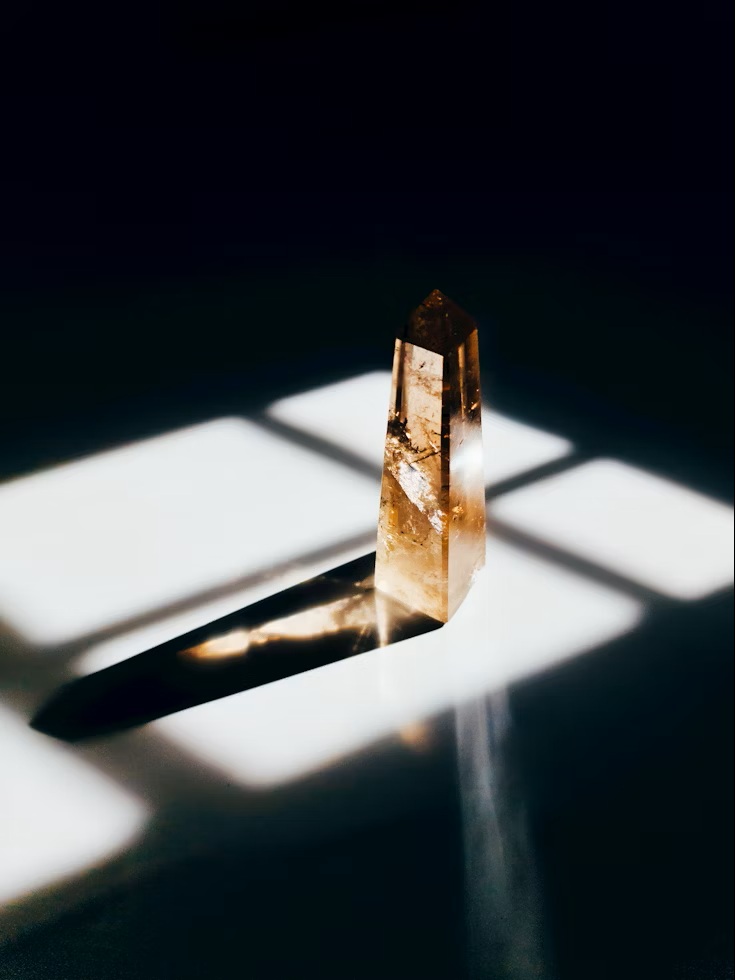
Since the dawn of humanity, crystals have accompanied us as more than simple ornaments. Ancient civilizations believed they carried sacred power and protection, serving as mediators between the human and the divine. Archaeological evidence suggests that as early as the Stone Age, people collected and used crystals not only for decoration but also as talismans, believing they held the energy of the Earth itself.
Thousands of years ago, the Sumerians used stones like hematite and flint in their rituals, convinced that these materials offered a bridge to the divine and a safeguard for their communities. In ancient Egypt, crystals such as lapis lazuli, turquoise, and carnelian adorned amulets and funerary ornaments, ensuring spiritual protection for the soul on its journey to the afterlife. Cleopatra herself is said to have crushed lapis lazuli to create the deep blue pigment for her eye makeup, a symbol not only of beauty, but of strength, protection, and spiritual vision. Crystals in Egypt were more than adornments; they were embedded in religious rites, royal regalia, and sacred architecture as embodiments of cosmic order and divine favor.
In Greece, the very word krýstallos meant “eternal ice,” reflecting the belief that quartz was a form of frozen water, forever untouched by time. Gems like amethyst were believed to protect against drunkenness and excess, bringing clarity of mind and balance to the spirit. Philosophers and healers alike turned to stones for their supposed virtues, weaving them into mythology and medicine. In China, jade held a unique place as a symbol of virtue, purity, and immortality. Revered as the “stone of heaven,” it was carved into intricate talismans, placed in tombs to protect the dead, and used in rituals to harmonize the body with the flow of vital energy, or qi.
Across the ocean, pre-Columbian shamans in the Americas worked with quartz, pyrite, and magnetite in ceremonies intended for healing, protection, and communication with the spirit world. Crystals were considered vessels of wisdom, tools that could align the individual with the rhythms of nature and the cosmos. Later, during the Middle Ages in Europe, the fascination with stones took on a more scholarly form. Lapidaries, texts that catalogued the properties and virtues of gems, became essential references for physicians, alchemists, and healers. These works described not only the physical attributes of crystals but also their influence on the body, the mind, and the soul, bridging science and spirituality in a way that shaped medieval medicine.
What is fascinating today is that this bond with crystals has never been lost. Despite the passing of millennia and shifts in culture, crystals continue to appear in meditation, rituals, and daily practices of self-care and awareness. For many, they are reminders of the Earth’s energy, each stone carrying a vibration, a memory, and a story that transcends time. When we hold a crystal in our hands, we are not simply holding a mineral, we are connecting with the heartbeat of the planet and the ancient wisdom of those who came before us. They remind us that throughout history, humans have always sought to find meaning, guidance, and healing in the quiet brilliance of the stones born deep within the Earth.