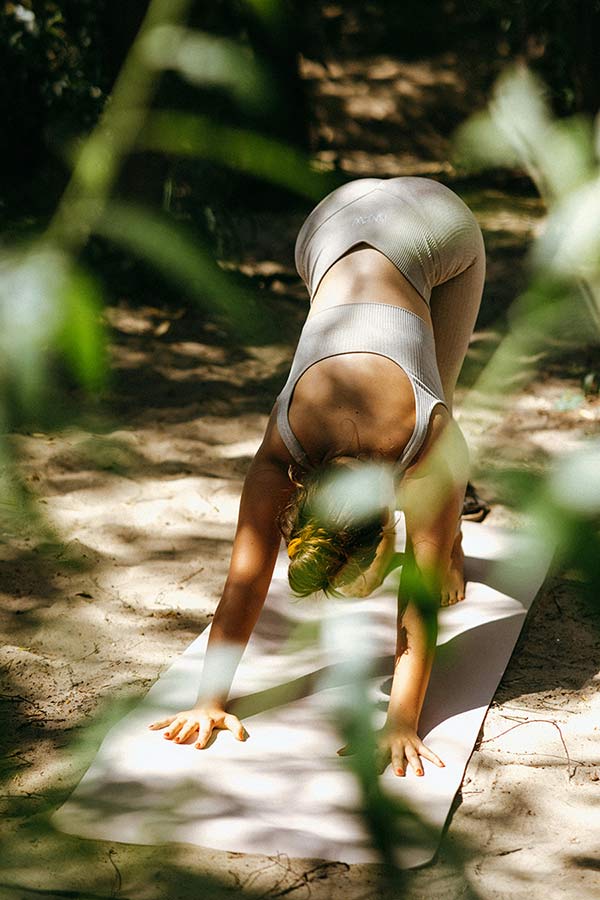
Sometimes the simplest postures are the ones that confront us the most. We might look at a shape like Tadasana, the mountain pose, and think, “Is that it? Just standing?” Yet behind this apparent simplicity lies a mirror. To stand still, to feel the ground, to align the spine and balance the breath is often harder than folding into the most complex twist.
History is filled with stories of yogis who dedicated years to what seemed like the most basic practices. One example comes from Swami Krishnananda, a disciple of Swami Sivananda, who once remarked that sitting quietly in Sukhasana, cross-legged with a straight spine, had taught him more about himself than many elaborate practices. The body resists, the mind wanders, the ego rebels, he wrote, yet in this stillness one finds the gateway to freedom.
Why do these postures feel like challenges? Because they strip away distraction. They expose our restlessness, our impatience, and our tendency to seek complexity instead of depth. A forward fold that seems unnecessary or a strange breathing exercise often reveals where we carry resistance, tension, or hidden emotion. It is not the shape that matters, but the confrontation with what arises within us.
There is also a curious note in yoga history. Many of the ancient texts describe far fewer postures than the hundreds we see today. The Hatha Yoga Pradipika, written in the fifteenth century, names only fifteen asanas, and Patanjali’s Yoga Sutras mention just one: sthira sukham asanam, a seat that is steady and comfortable. This shows us that the original aim was never physical perfection, but cultivating presence through simplicity.
When we approach these simple postures with humility, they forge our character more than our body. They teach patience, resilience, and acceptance. They remind us that yoga is not about impressing others with flexibility, but about being willing to face ourselves, breath by breath.
These seemingly modest practices are like hidden gems. If we underestimate them, we lose the chance to discover treasures that only reveal themselves in quiet repetition. In that stillness, the mountain pose becomes a true mountain, firm, unshakable, and rooted in silence.