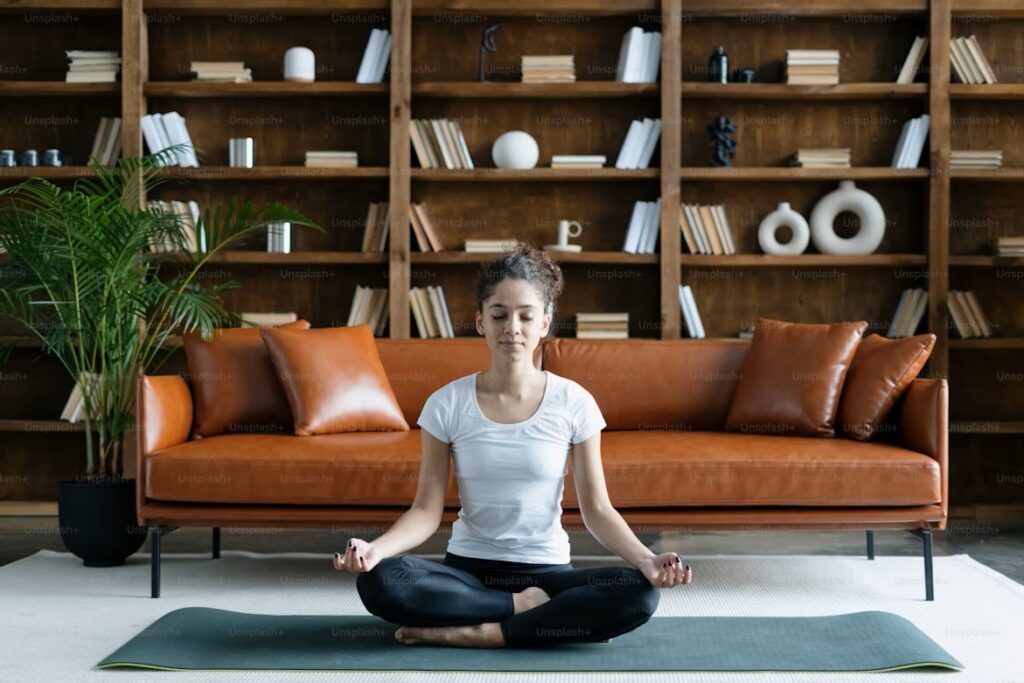
When we hear the word meditation, many of us imagine someone sitting cross-legged, eyes closed, trying to block out thoughts. Yet meditation is far from a passive act of “doing nothing.” It is an active practice that reshapes the way we relate to ourselves and to the world.
Scientific studies in the past two decades have confirmed what ancient traditions have known for millennia: meditation is a powerful tool for improving mental clarity, emotional balance, and overall health. But how does this practice really work, and why is it so relevant to our daily lives?
At the level of the brain, meditation has been shown to increase gray matter density in areas linked to memory, learning, and self-regulation. It enhances the prefrontal cortex, the region responsible for decision-making, focus, and problem-solving, while reducing activity in the amygdala, the center of fear and stress responses. This means that regular meditation not only helps us stay calm in stressful situations but also supports more thoughtful and less impulsive choices.
Biologically, meditation can lower cortisol levels, the hormone associated with stress, and regulate heart rate and blood pressure. It improves sleep quality, reduces inflammation in the body, and even strengthens the immune system. These physiological shifts create a ripple effect: less fatigue, greater resilience, and an overall sense of vitality.
Cognitively, meditation trains attention. By practicing focus on the breath, a mantra, or a visual image, we cultivate the ability to notice distractions without being controlled by them. This attentional training sharpens concentration, improves memory retention, and enhances creativity. Over time, it allows us to experience moments of mental clarity that flow naturally into our daily routines, from work tasks to meaningful conversations.
Beyond the science, meditation has a very practical role: it gives us pause. In a fast-paced world, even five minutes of conscious breathing can reset our nervous system and shift how we experience the day. That small act of presence becomes a way to respond rather than react, to choose rather than be carried away.
There are many types of meditation, each suited to different personalities and goals:
Mindfulness meditation focuses on observing thoughts, emotions, and sensations without judgment.
Mantra meditation anchors the mind by repeating a sound, word, or phrase.
Loving-kindness meditation (Metta) cultivates compassion and goodwill toward oneself and others.
Transcendental meditation uses a personal mantra to reach a state of restful awareness.
Movement-based meditation such as yoga, tai chi, or walking meditation brings awareness through physical motion.
Meditation is not about escaping life, it is about entering it more fully. The stillness we cultivate on the cushion or the mat gradually infuses our everyday choices, our relationships, and even the way we perceive ourselves.
Perhaps the real question is not what meditation is, but how it can become part of your life.